clinesmithdaron47's pick · Updated September 2026
Heads up Display for Cars

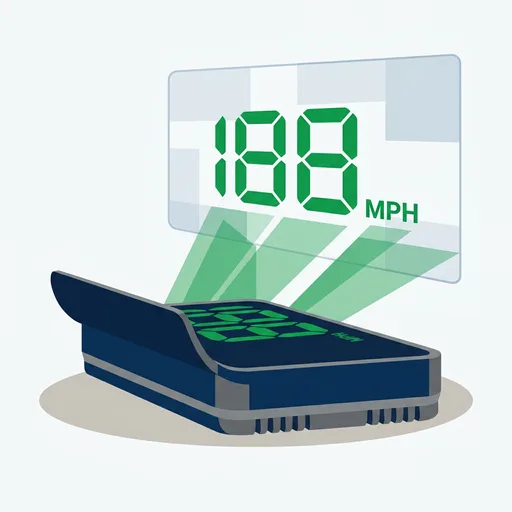
A car HUD can make sense for drivers who want speed and basic trip data in a place that is easier to glance at than a center console. That is especially true for older vehicles without a built-in display, for drivers who prefer not to keep looking down at the dash, and for anyone trying to keep the windshield area as uncluttered as possible while still having key information in view.
The main reason to consider one is simple: it gives you another way to read the numbers that matter while driving. Depending on the model, that may include speed, GPS-based speed, direction, battery voltage, or alert functions tied to the vehicle or to navigation. For some shoppers, the appeal is not that it adds a lot of features, but that it can reduce the need to shift attention away from the road for basic checks. That is the sort of benefit worth comparing across listings, because HUD products vary a lot in what they actually show and how they connect.
The important thing to verify before buying is compatibility. Some units plug into OBD2, some rely on GPS, and some do both in different ways. That changes what they can display, how they get power, and whether they will work in a given vehicle. It is also worth checking where the unit sits, how the projection is mirrored, whether the brightness is adjustable enough for daytime use, and whether the screen or reflection is easy to read without blocking the driver's view. Those details matter more than the headline description.
Because there are no usage notes here, this page should be read as a buying guide rather than a report from personal use. The safest way to judge a car HUD is to look closely at the mounting method, the display style, the source of the speed reading, and the range of vehicles supported. A GPS-only model may be simpler to install, while an OBD2 model may offer more vehicle data if the car is compatible. Either way, the right choice depends on how much information you want and how cleanly the device fits your dashboard layout.
A small tradeoff to keep in mind is that more information is not always better in a car. If the display is too bright, too cluttered, or placed in a way that feels distracting, the convenience drops fast. It is worth confirming that the unit can be positioned where it is easy to read without drawing too much attention away from the road, especially if the car already has a digital speed readout or a well-placed instrument cluster.
This kind of product may fit a driver who likes practical add-ons and wants a clearer, more direct read on speed or navigation data. It may also suit someone with an older car who wants a simple upgrade without replacing the whole stereo or dash. For shoppers willing to check compatibility and display clarity first, a car HUD can be a sensible, focused purchase.
Some Amazon links are affiliate links. clinesmithdaron47 may earn a commission from qualifying purchases at no extra cost to you. As an Amazon Associate I earn from qualifying purchases.
See current price